
A Mobile Time Machine
Introducing the media digitizing lab on wheels

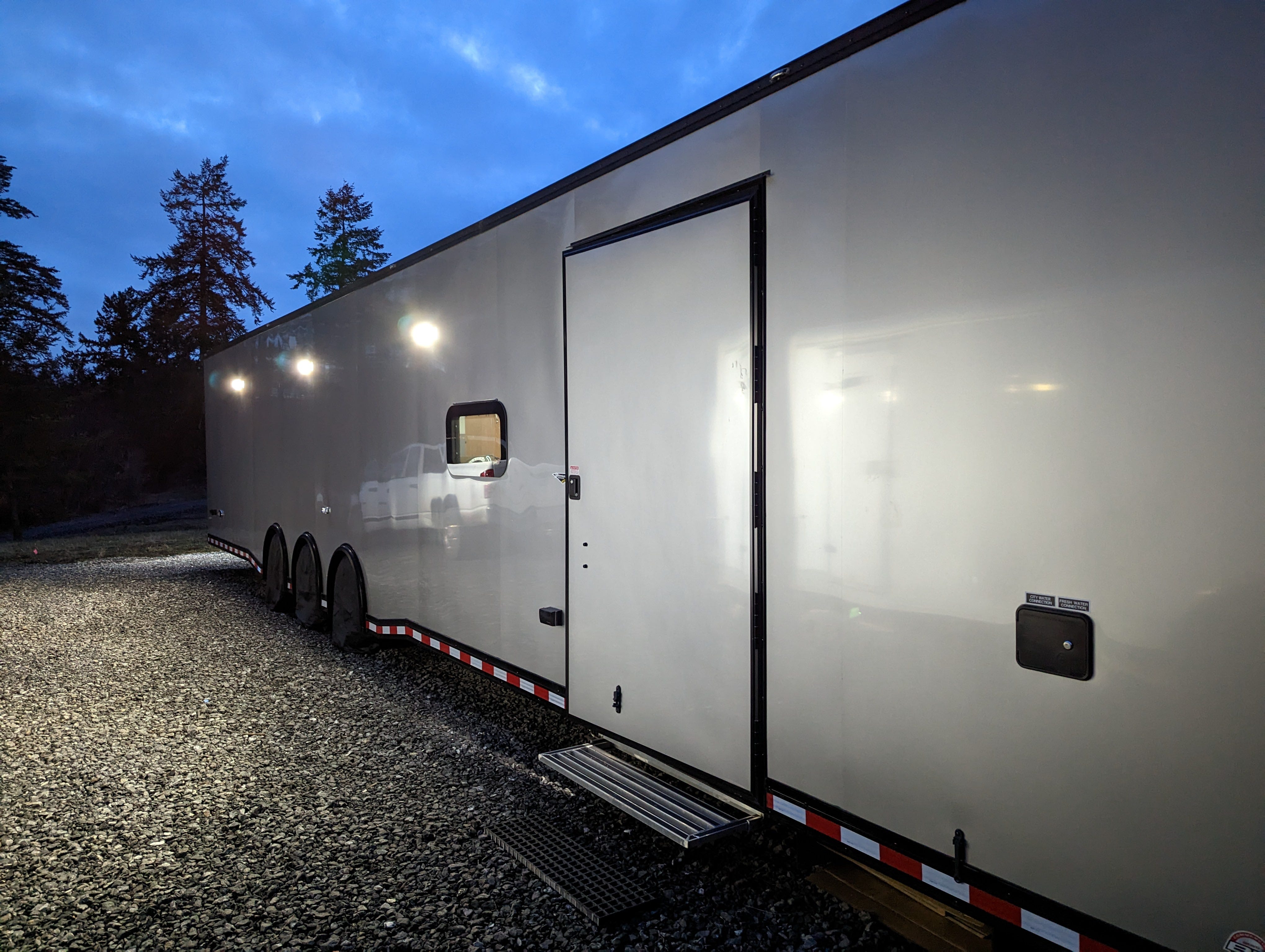
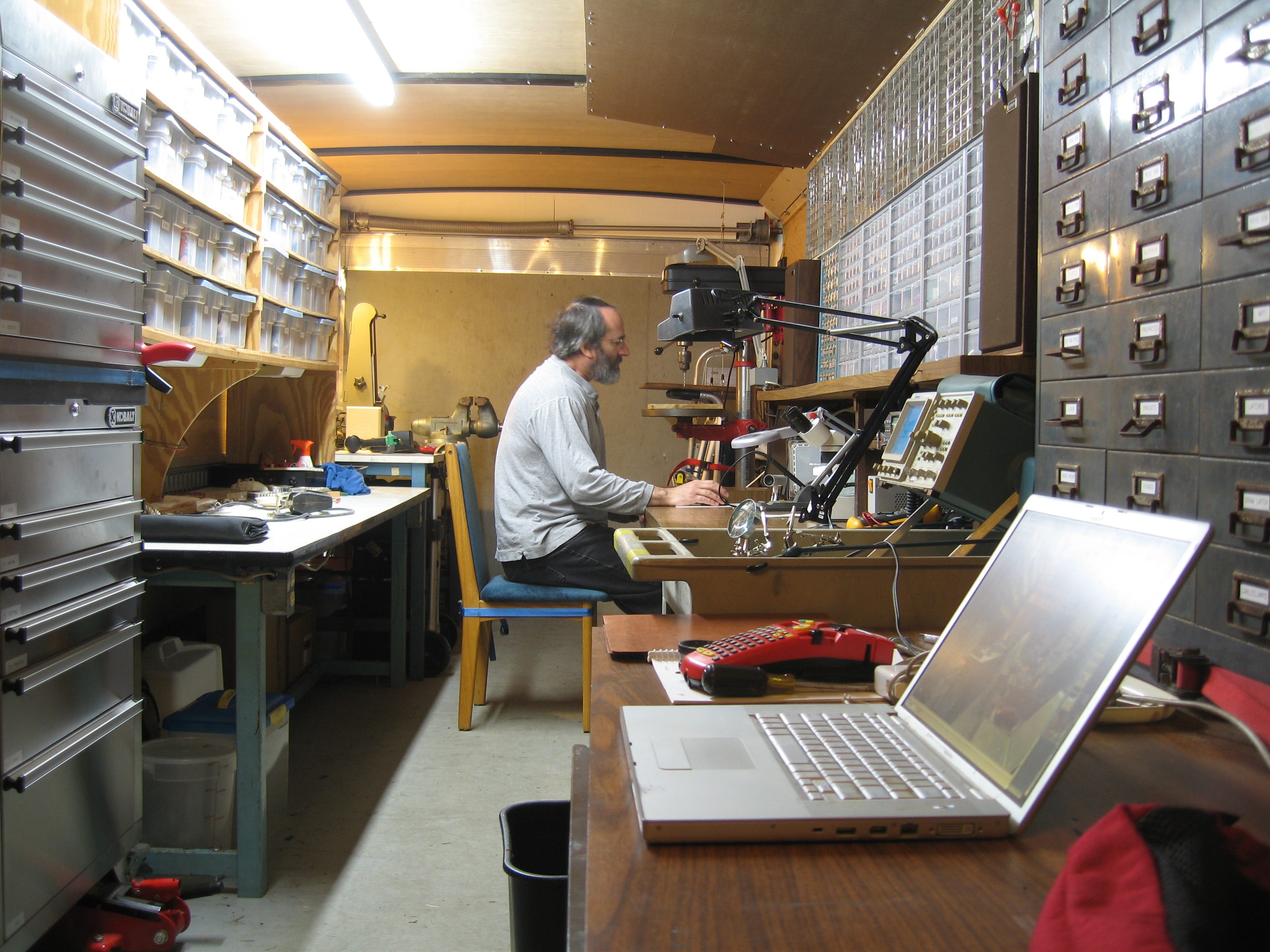
I'm sitting in a blinky laboratory parked on the edge of a forest on San Juan Island, surrounded by ancient media, transports, and digitizing systems. For seven years I have been fine-tuning the toolset for recovering analog treasures, and it is all integrated into a 48-foot mobile lab.
This echoes a lifetime of building technomadic machines and writing about them, and in this first post of the series I want to give you a quick look at the setting. But first, a quick bit of history…
Street Cred
One September day in 1983, not yet knowing that I was about to become the first digital nomad, I escaped midwest suburbia and spent a decade wandering the US aboard a computerized recumbent bicycle. The exuberance of that epoch is dreamy in retrospect, 40 years down the road: trading security for a life of übergeeky fun as a wandering writer, I discovered that I could play for a living without giving up any technological obsessions.
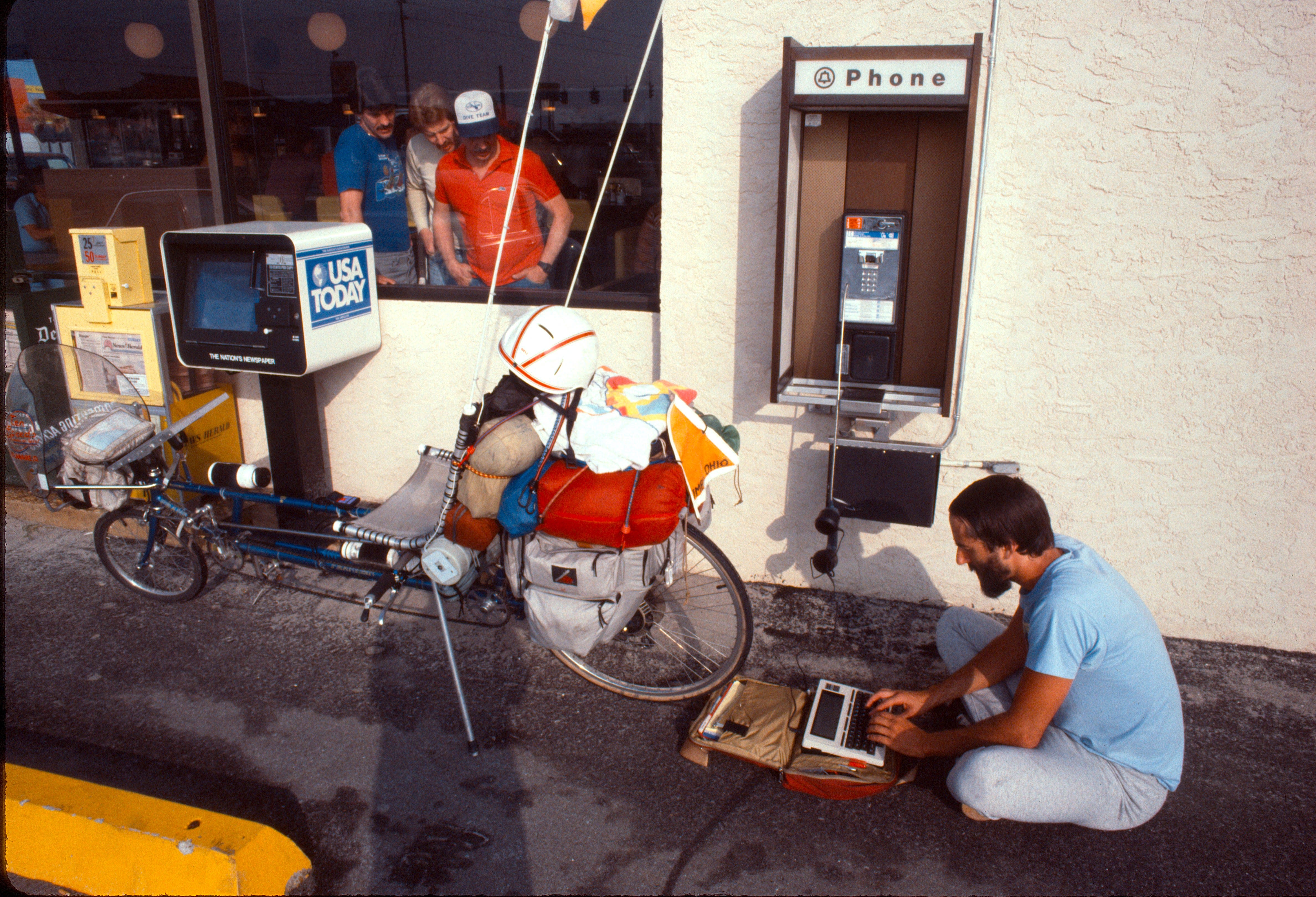
My virtual hometown was CompuServe, and I carried the embryonic 4-pound portable computer called the Model 100… complete with 300-baud modem. This combination turned my 17,000-mile bicycle tour into a preview of what lay ahead for society, exploring the amazing idea that physical location could become irrelevant once you move to "Dataspace.” My life inverted; instead of working to pay for a house in a city I didn’t like, I wandered my global neighborhood, dropping in on friends and writing about the tools that made it possible. Photographers loved the shiny recumbent parked by a pay phone with the tall bearded high-tech nomad pattering on a laptop, and stories flowed like hot breath… including a book called Computing Across America.
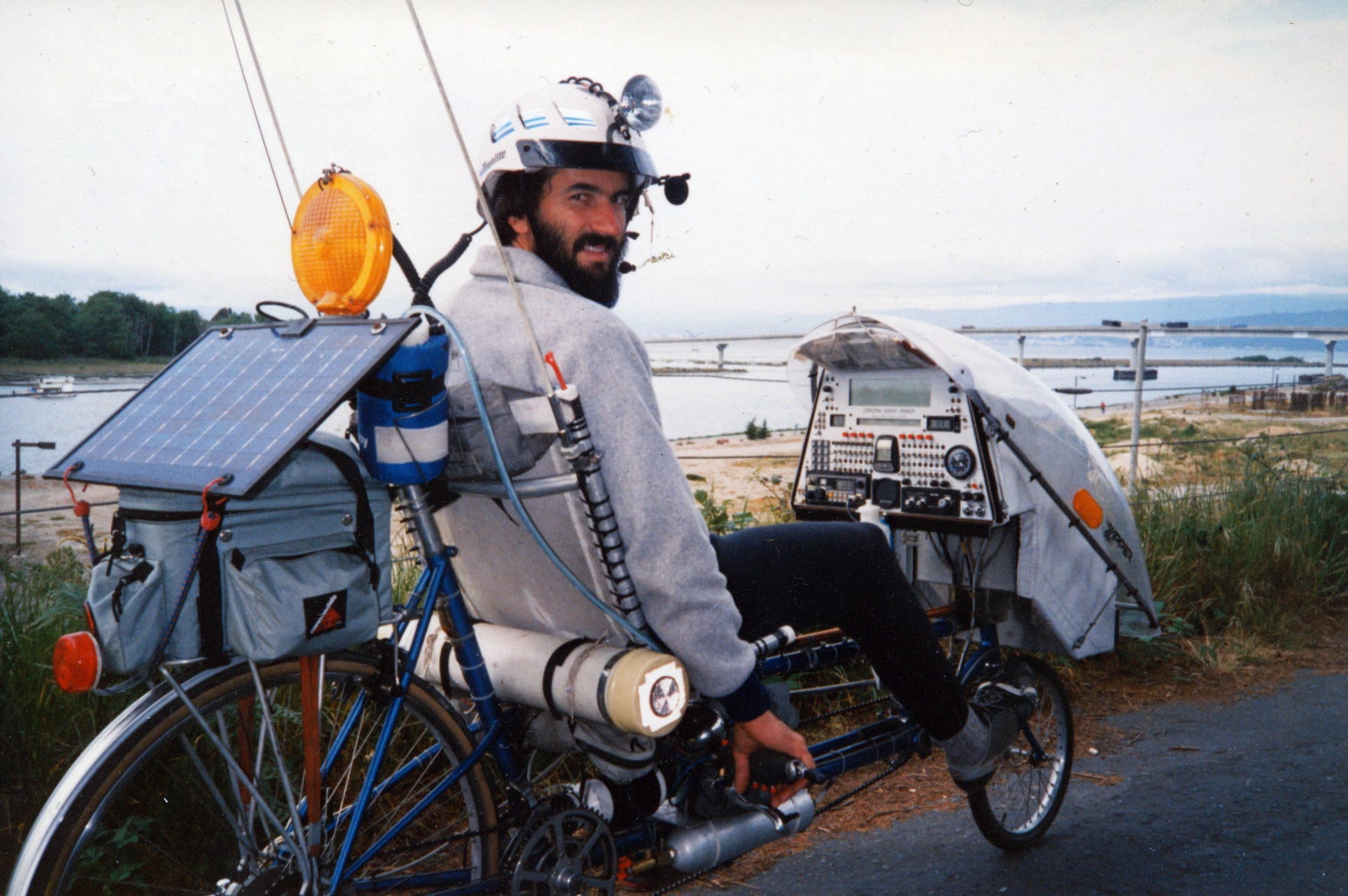
There were three versions of this machine, and by 1991 it sported a binary handlebar keyboard, satellite link for the newfangled Internet, heads-up display, console Mac for biketop publishing, elaborate security system, GPS with CDROM maps, helmet cooling, multimode ham radio station, 82 watts of solar power, and much more... all integrated into a beast of a custom recumbent named BEHEMOTH, with 105 speeds and deployable landing gear.
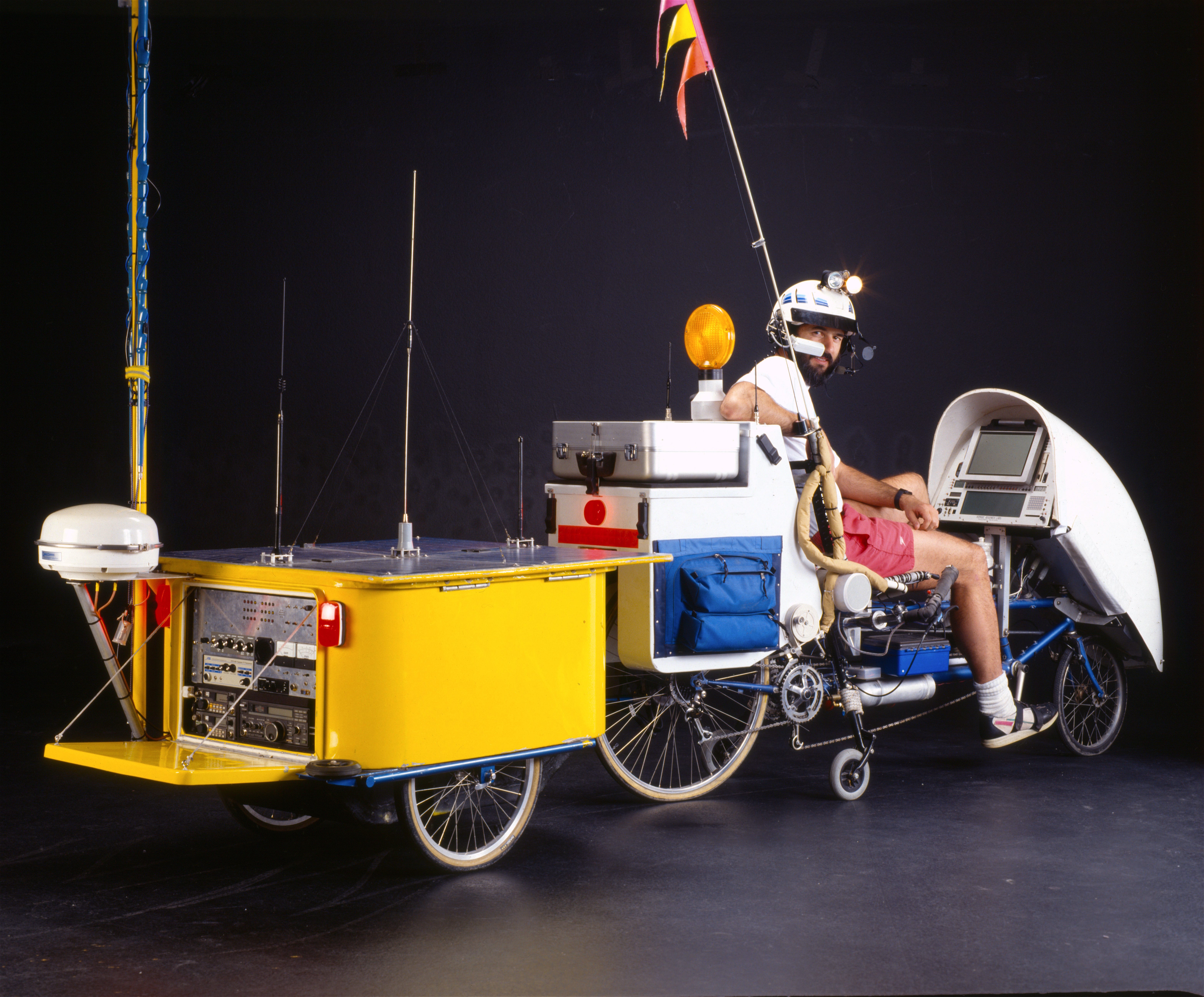
The bike was retired in 1992 and, after a few years on the speaking circuit, moved to its forever home in the Computer History Museum.
Those youthful halcyon days of human-powered gizmology may be a distant dream… but I have a new pull toy!
Mobile labs have always been favorite tools in my stable, and I bought my third one, a 24-footer, when I was in Kentucky to shut down the old family home in 2005. It later became an efficient workspace while I was making the transition from the Camano Island woods to a live-aboard sailboat.
Among the trailer-load of family artifacts I hauled back from Kentucky were my dad’s old home movies, and they sat on shelves for decades as I pondered a digitizing solution. A pair of 5-inch reels especially intrigued me — he had been on the maiden voyage of the liner America in August 1940, leaving New York for the Caribbean, then exploring Havana, Port au Prince, San Juan, and St Thomas. With close-up snippets of life aboard ship and amazing glimpses of a gone world, these needed to see the light of day. So did the Lake Superior cruise on which he met my mom, their 1946 honeymoon in Bermuda, a 1940 GE office party, Swarthmore College reunions from the same decade, and Star-sailing adventures in Erie while he was a young engineer at GE.
But when I dove into the online rabbit hole of digitizing lore, it was intimidating… with tales of films sent offshore, lost, mixed up, digitized poorly, or done well but costing an arm and a leg. OK: why not just acquire my own system, do his films, then eBay it and move on?
Well, you know how that goes…
The Traveling Circuits
Seven years later, that simple plan has evolved into a mobile digitizing lab packed with exquisite tools for film, video, audio, slides, negatives, books, and digital media. Between my own work and constant involvement with others in the field, plus my lifelong habit of writing about my projects, I have enough material for a weekly newsletter about digitizing. There will be posts about processes, signal routing, evolving technology, tricks and techniques, wonders from the archives, the mechanics of running a digitizing business, insights from experts, and the mobile lab substrate.
Let’s start with that! Meet Delta, a 48-foot beast parked on the edge of a forest in the Pacific Northwest. (The name refers to my fourth trailer, with the Δ engineering symbol expressing change.)
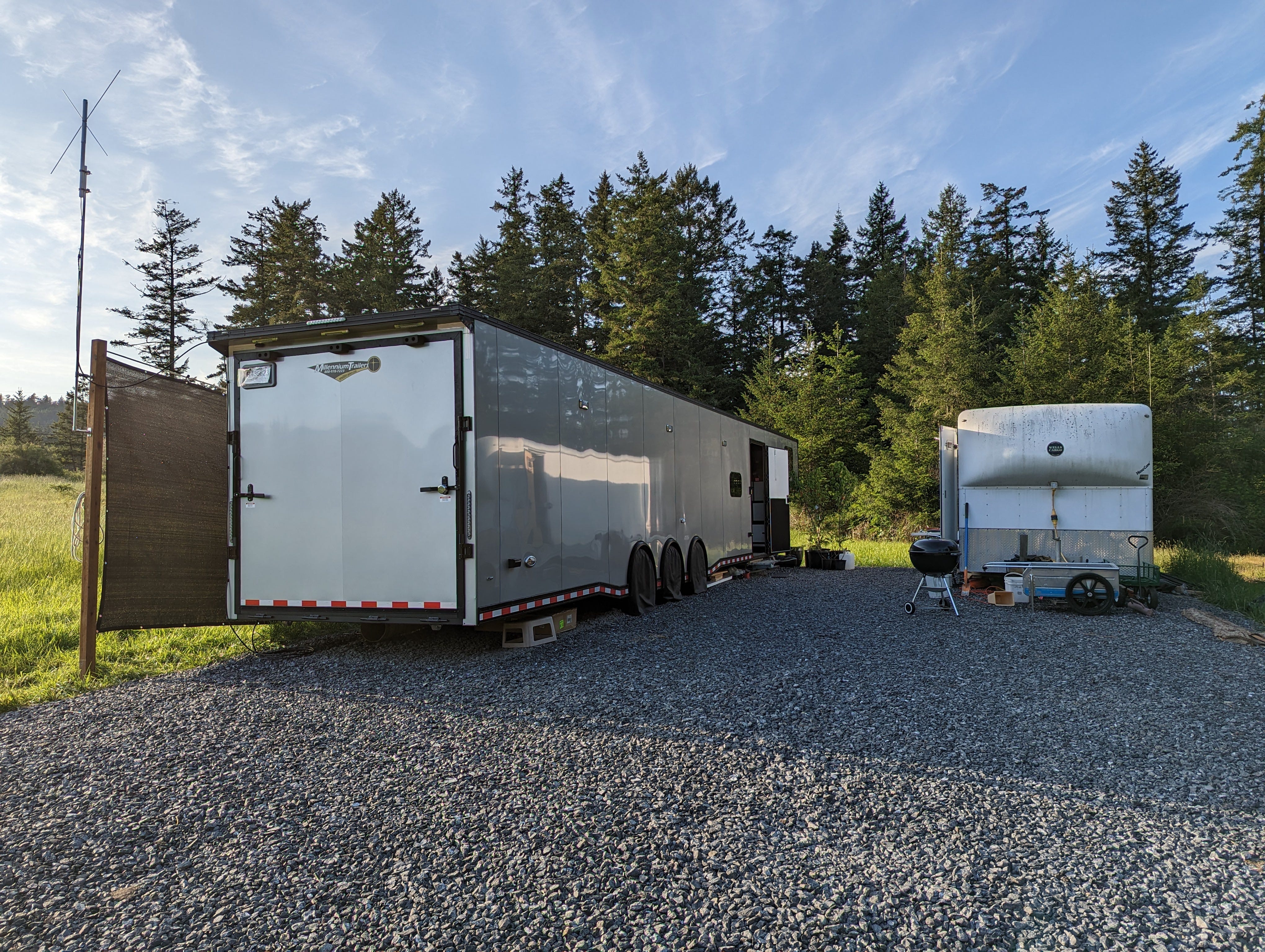
I purchased this beast when my lease in town became unstable, and familiar technomadic urges resurfaced. I had fantasies of a mobile business model, since nobody wants to mail precious analog artifacts without backups. But before we can even think about any of that, we have to build a digitizing lab.
Behind that shiny aluminum skin there’s a dense wall of equipment integrated into a rolling console, workstations for films and transparencies, video production studio, scanning tools, bathroom with bidet and shower, comm console, giclee printing station, network rack fed by Starlink, 180 terabytes of NAS, and a gooseneck region with project shelving and a place to collapse. Coming soon — a lithium split-phase power system with 4KW of solar panels, and a generator to reduce dependence on utilities.
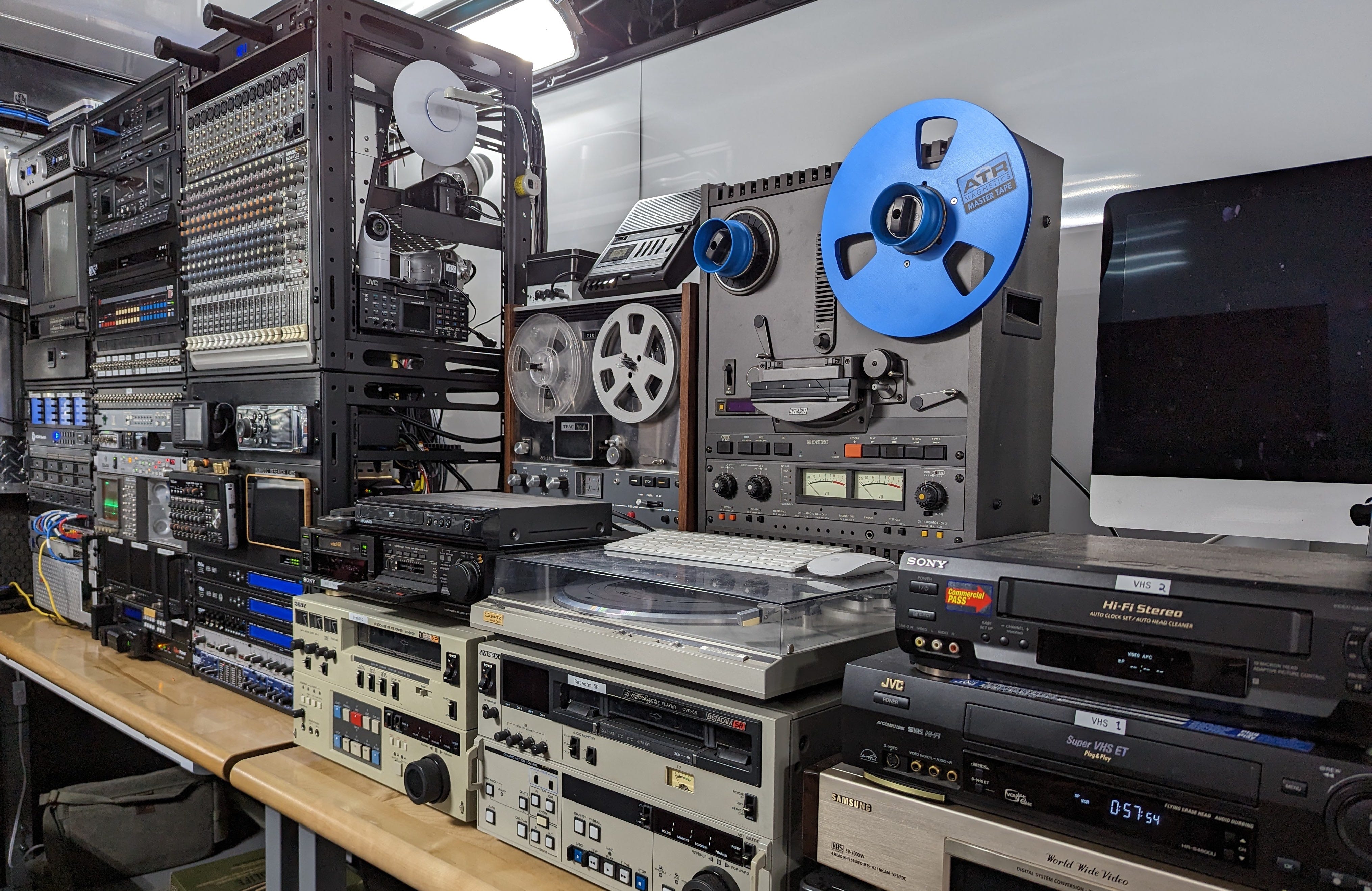
That 10-foot console presented a problem: rear access for cabling. With locking industrial casters and E-Track on the wall, it pulls out for service… though there is a lot of shock-isolation yet to be done before I can risk the abuse of towing.
Across the hall are the film workstations. Movies include 8mm and 16mm (with both optical and magnetic sound), and the copy station at right shoots slides and negatives up to large format. We capture those RAW with a mirrorless camera on color-accurate backlight, then run everything through Lightroom with a little help from NegativeLab Pro. Magic happens here.
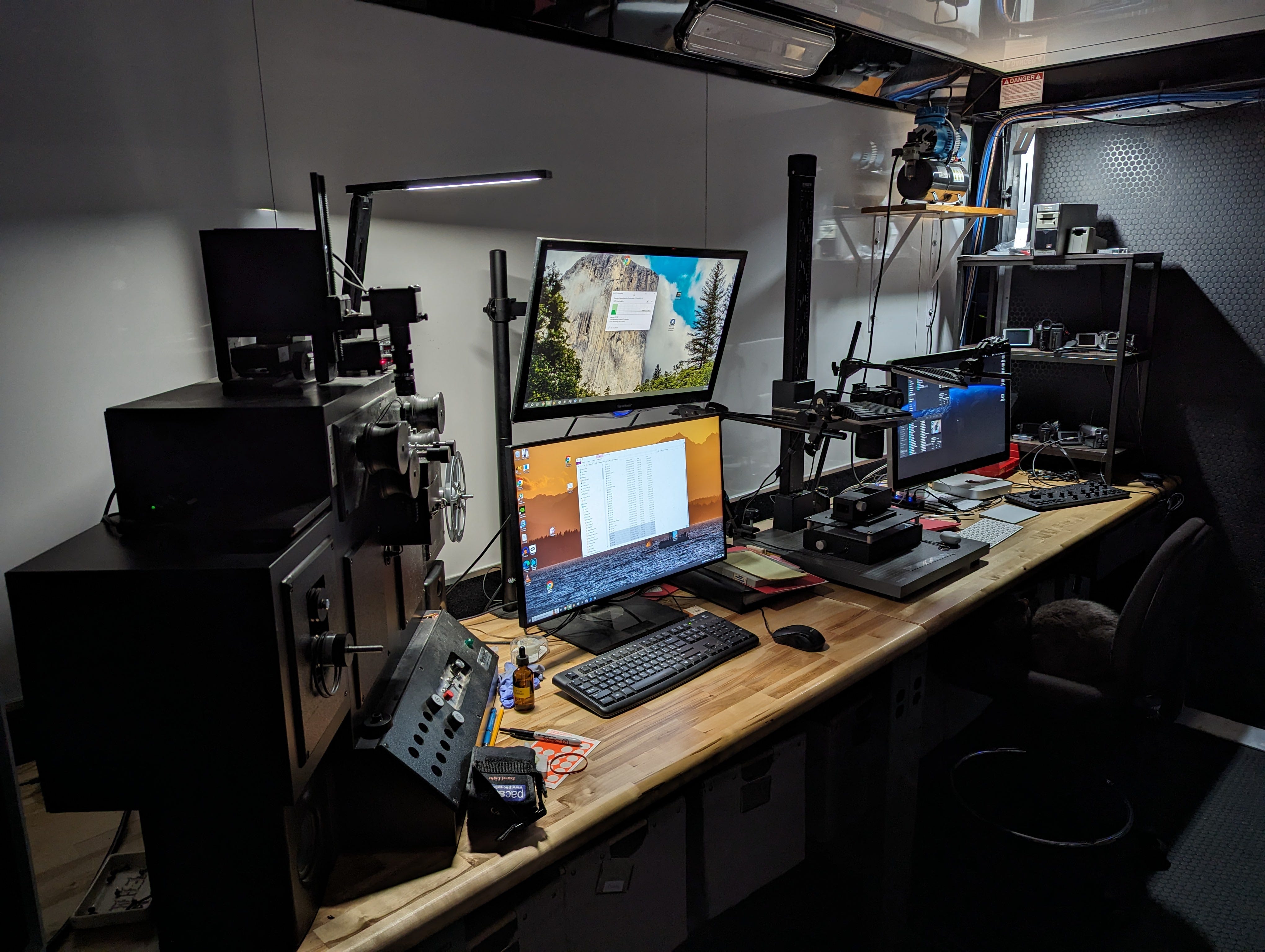
For the past week, I’ve been parked in this zone for a few hours a day, living in the 1930s… every frame captured down to the grain. In the movies, sometimes those are even more interesting than the exported video — one recent huge reel held over 55,000 photos packed with historical detail and fleeting micro-expressions never seen in posed photos.
There’s more. Just behind the photographer above is a video studio, where source switching allows any of about 20 HDMI feeds to be selected on-the-fly… including well-lit talking head with teleprompter, B-roll from a nearby Mac, and downward-looking camera that is also a book scanner.
A Home Assistant installation encompasses the entire site including Gamma (the 24-foot electronics lab trailer parked next to Delta). This integrates weather, inside air quality, security, lighting, power usage, human location and smartphone sensors, NAS status, and digitizing equipment control via ancient interfaces like infrared and serial ports. We’re now adding local AI, with the LLM running on local NVIDIA hardware.
Crosspoint switching handles all audio and video, in addition to the HDMI mentioned above… anything can talk to anything, making it possible to reconfigure on the fly and drop new tools into the system without the disruption of re-cabling. This is much more effective than a mixer, and allows multiple simultaneous processes to take place.
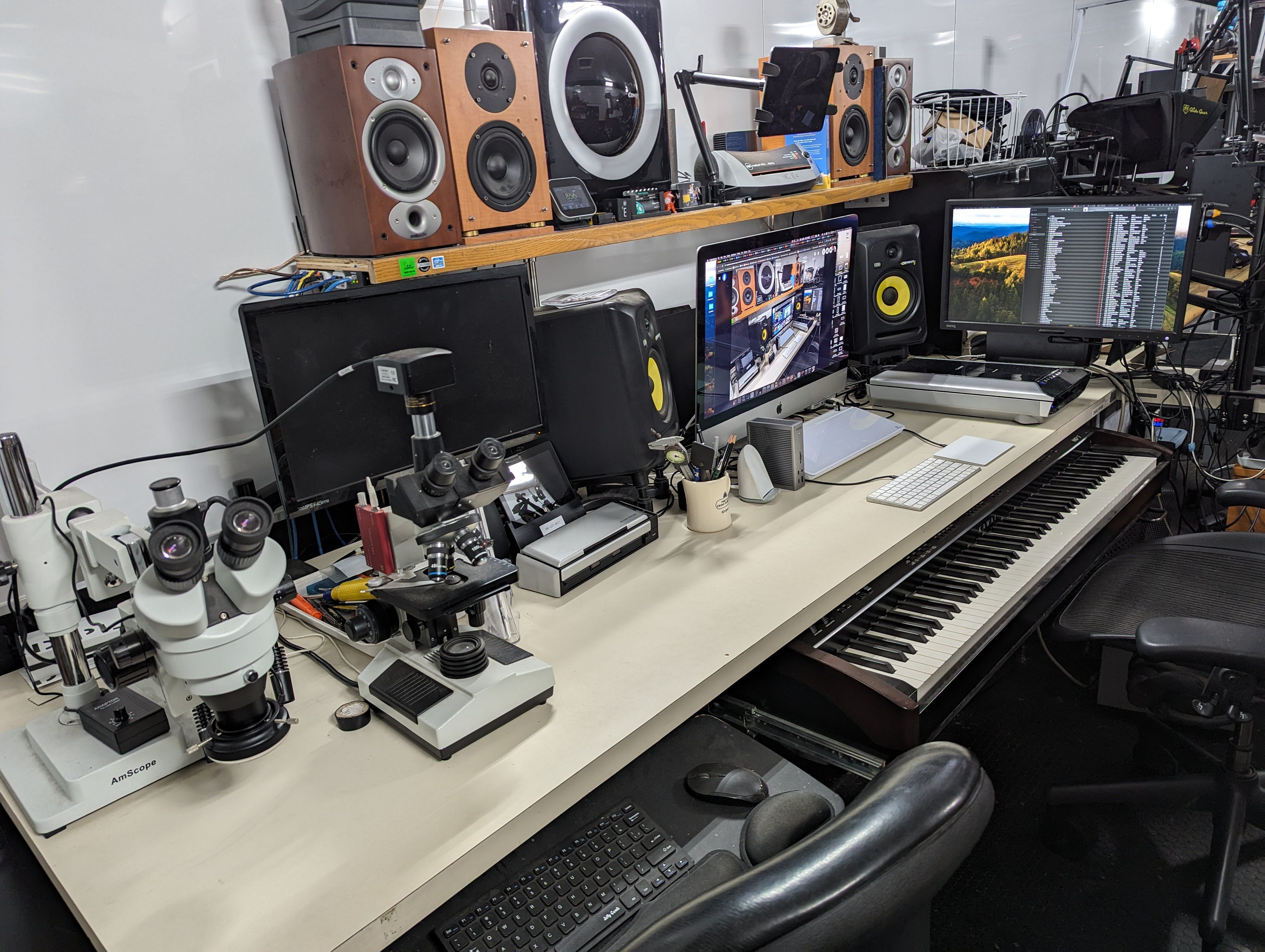
And there is a pull-out drawer for musical emergencies, as well as an acoustic sweet spot and the essential tools for bio/film microscopy:
A Geeky Brain Dump
For much of my adult life, I have published ongoing narratives about my projects, including an engineering textbook over 40 years ago <creak>. In my technomadic years of deep immersion in computerized bikes and boats, all this paleoblogging spawned a community of folks who loved the tech details, offered consulting help, or just enjoyed armchair adventure. One of my favorite comments from those days was “thanks for reminding me why I became an engineer.”)
But this series is different. The digitizing lab scales well, as the need for this kind of work is essentially infinite (every family has that box). How-to articles about this are useful, whether someone is running a business or just wants to put Dad’s musty VHS tapes onto a thumb drive for the kids. This newsletter is thus a series of practical tech topics, not a personal narrative about my adventures in the lab.
So with that, welcome to The Digitizing Report — and cheers from the Mobile Lab!
—Steve
When it’s convenient, drop me a note on Compuserve. I’m at 72667,1312. 😃